
Real Estate
At the edge of Nootka Sound, B.C., a remote $1.6M home floats on the water

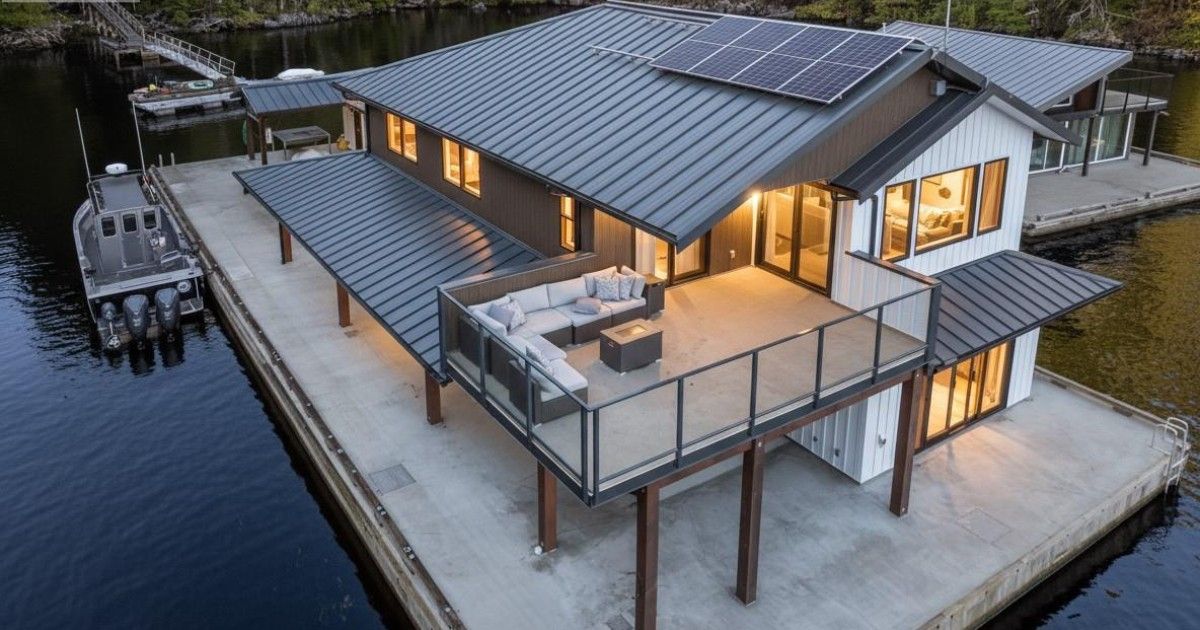
0 Hoiss Point (courtesy: Greg du Cloux, Megan Centrone, The Tidal Group).
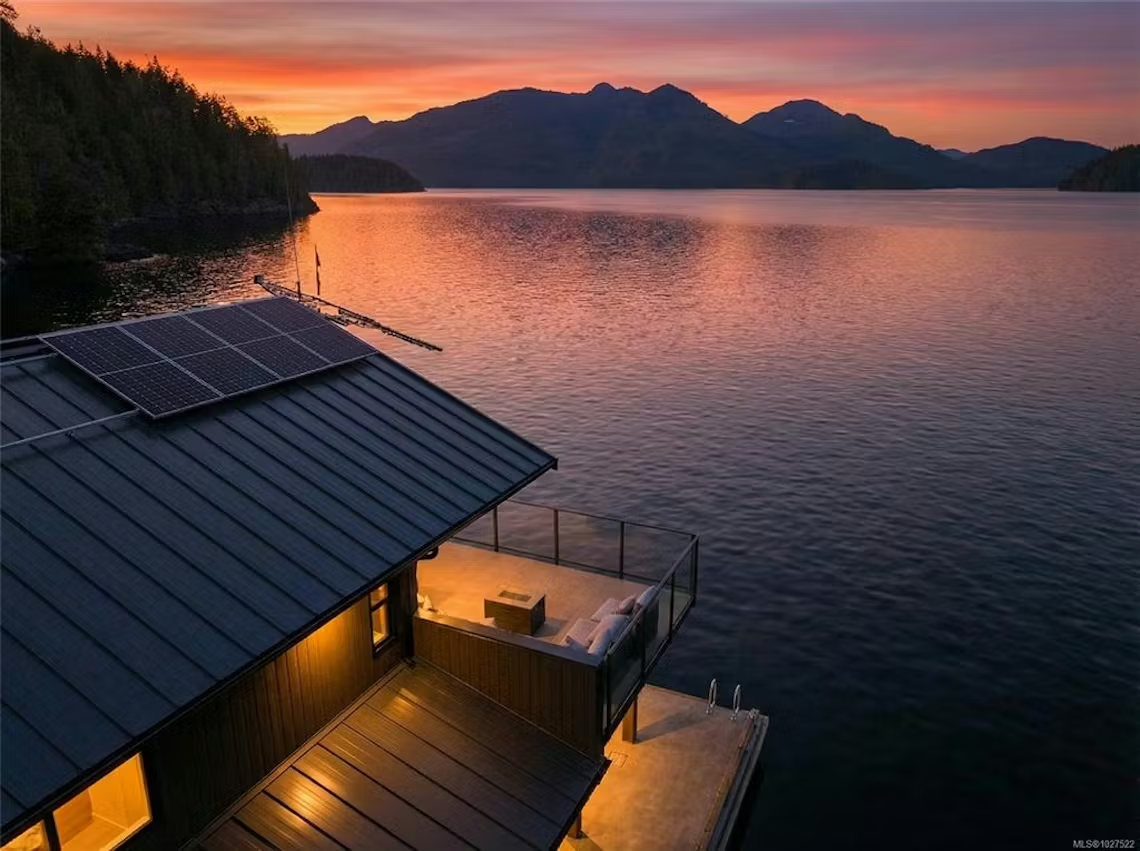
In Nootka Sound, where fishing boats slip quietly out at dawn, a striking $1.6-million home floats on the water near the remote community of Gold River on Vancouver Island’s west coast, offering a rare lifestyle not just on the water, but entirely surrounded by it.
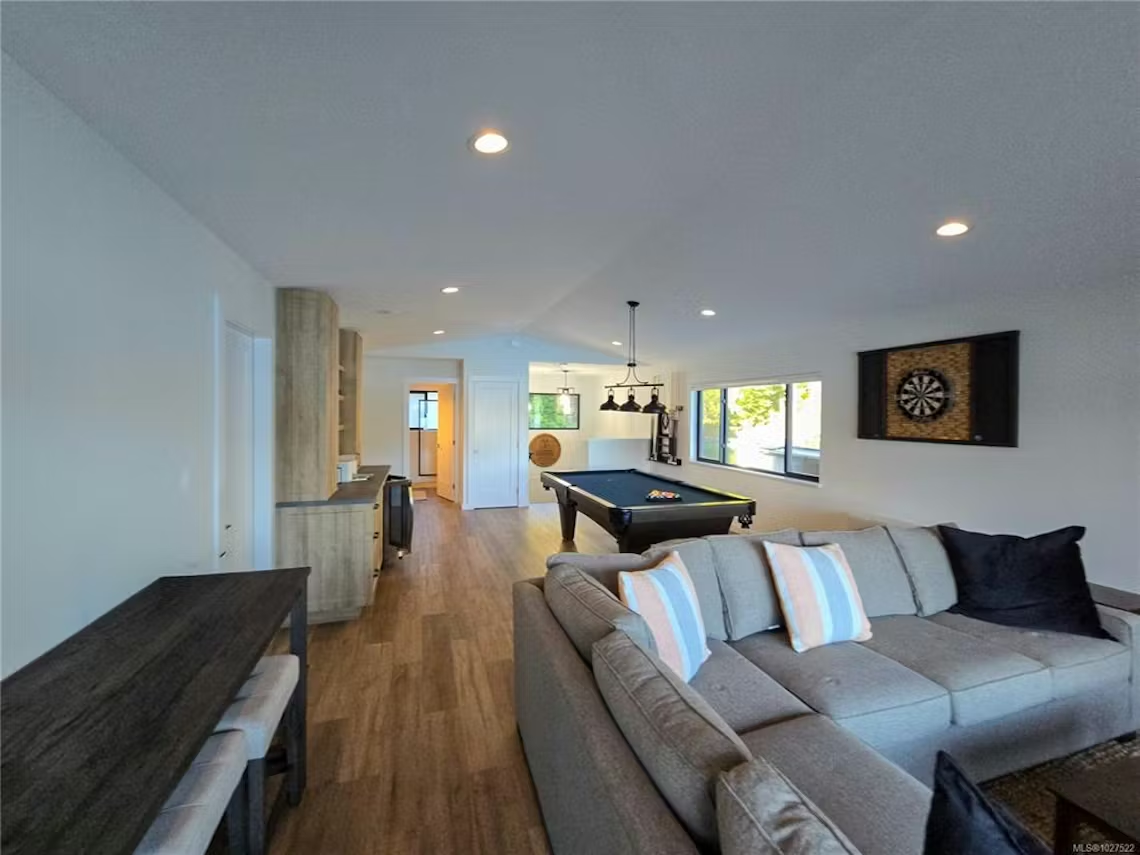
The home sits in one of British Columbia’s most famous sportfishing destinations, with access to trophy tuna waters and strong salmon runs. Built in 2023, the 2,600-square-foot home at 0 Hoiss Point balances rugged adventure – a dedicated fish cleaning station is one example – with the laidback luxury of a gas fireplace, a large kitchen, panoramic views and even room for a pool table.
“It’s not for everyone, but it’s exactly right for someone,” said agent Megan Centrone of The Tidal Group of eXp Realty, who has the listing with Greg du Cloux.
The modern residence, which has four bedrooms, three bathrooms, is accessible by a gravel road, with a gangway affixing it to land. The other option is travelling by boat, which Centrone said she did, departing from Moutcha Bay Resort. The trip to Hoiss Point takes about 15 to 20 minutes.
Courtesy: Megan Centrone
“It feels remote, but it’s actually quite accessible,” Centrone said.
For buyers familiar with the area, the location alone carries weight. Nootka Sound, along with nearby fishing lodges such as Moutcha Bay, has built an international reputation among sportfishing enthusiasts, said Centrone.
Personal or commercial use – or both
The Hoiss Point home sits entirely on a floating concrete platform. Float homes are more common in parts of southern Vancouver Island, particularly in areas like Genoa Bay near Cowichan Bay. In the waters of Nootka Sound, however, they are far less likely.
“They’re really special tucked-away surprises,” Centrone said.
The current seller is the property’s original owner. After the home was constructed in the nearby city of Campbell River by Pacific Marine Construction, it was transported to its current location, a process that can involve significant planning and expense, said Centrone, which was factored into the listing price.
“Getting it to the location is a huge win that it’s already there,” Centrone said.
Centrone said the current owner uses the property as an escape from the hustle and bustle of everyday life, enjoying the surroundings for family time and activities, like hiking.
Beyond private enjoyment, the property has the capacity to sleep up to 10 people, making it an ideal space to transform into a vacation rental. It already has commercial zoning, which would allow a sportfishing lodge.
A listing approach as unique as the property itself
Courtesy: Megan Centrone
Listing a float home in remote B.C. involves a few unusual steps that differ from traditional properties, said Centrone, who has prior experience selling this type of home.
The property does not have a standard street address or property identification number because it sits on water rather than land. Centrone said she must be creative to even make the listing.
“I have to make a special phone call to the real estate board because it doesn’t have an address,” she said. “I just put ‘0’ and name it the Hoiss Point cabin.”
Instead of traditional land ownership, the structure occupies water through a foreshore lease that grants the right to keep the float home in that location. The lease still has years remaining and should be able to be renewed with no issue, said Centrone. The structure could even be relocated if a future owner wished to move it to another suitable site.
Establishing value for a float home also requires a slightly different process.
“When you list something like this, you can’t just pull a title and tax information like you would for a normal home,” she said. “A marine survey is kind of the equivalent.”
The survey evaluates the structure and components of the float home and helps determine its value, which in turn supports the listing price.
She notes that there are zero property taxes associated with the float home.
Interest from buyers near and far
Courtesy: Greg du Cloux, Megan Centrone
Many prospective buyers are people who already know the area, whether through fishing trips, boating or time spent exploring Vancouver Island’s west coast.
“It’s usually someone who has an emotional connection to this area,” Centrone said.
Interest in remote recreational properties has grown in recent years as buyers seek an escape from the city, and opportunities to spend time outdoors.
“People want space, they want peace, and they want to be able to go out and catch their own food,” Centrone said.
Early response to the listing has been encouraging. Centrone said an agent from outside the province is already planning a visit to view the property with potential buyers.
“We have a showing booked and a few other serious buyers as well,” she said.
Centrone notes that because of the remoteness of the property, it’s not subject to the federal foreign buyer ban, which restricts transactions in larger metropolitan areas only.
Centrone, who grew up exploring remote communities along Vancouver Island’s north coast, says she can relate to the appeal of a lifestyle shaped by nature and adventure.
“I grew up visiting all these areas,” she said. “That’s why I prefer this over the cookie-cutter, traditional real estate.”


Courtney Zwicker is a digital reporter and associate editor for REM. Based in Atlantic Canada, she has over a decade of experience covering daily business news.


Cross-Canada drive with David Beard made Coulter Woodmansey comfortable to sign in Edmonton

Startup Waiv Spins Out of Owkin With $33M to Bring AI Precision to Cancer Decisions

US Army announces contract with Anduril worth up to $20B

Bob Vylan Banned From U.S. Over Glastonbury Controversy

For five older job seekers, finding new work took creativity, new skills and, in some cases, lowered expectations
