

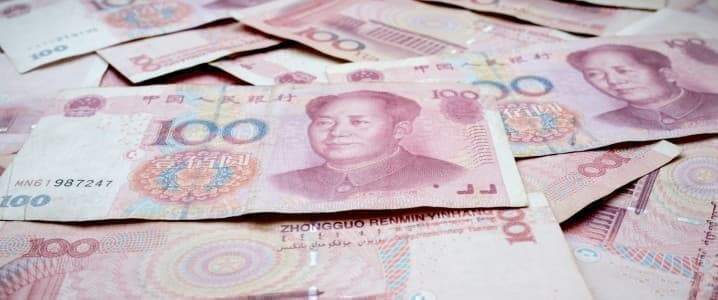
The Chinese yuan is making gains on the US dollar in Central Asia as a form of payment in commercial transactions. For example, the volume of trade in the Chinese yuan/Kazakh tenge (CNY/KZT) forex pair in Kazakhstan’s spot foreign exchange market grew by 102.1 percent to an equivalent of about $2 billion during the January-November period in 2025, compared with the same timeframe last year, according to Kazakhstan’s stock exchange platform, KASE. However, the US dollar (USD) remains the dominant foreign currency by far. For the USD/KZT forex pair, the volume of trade exceeded $60 billion, having shown 14.6 percent growth year-on-year. The greenback also generated some trade in pairs with the yuan ($2.6 billion) and euro ($1.7 billion). The second most popular foreign currency is the Russian ruble: it generated about $18 billion in trade in the RUB/KZT pair, representing 50 percent growth. The euro finished fourth with just $1.4 billion in the EUR/KZT pair, having grown by 20 percent. Kazakhstan’s forex market is the largest in Central Asia. The second largest is Uzbekistan’s, where the Central Bank’s report for January-November 2025 does not mention currencies other than the US dollar, reflecting its dominant position in the region.
Kazakhstan
Two Chinese entities – the Shanghai Institute of Mechanical and Electrical Engineering and Shanghai Electric Group – have been selected as suppliers for Kazakhstan’s largest renewable energy project, the 1 GW Mirny wind farm in the Zhambyl Region. The project is being developed by the Kazakh state-controlled companies Samruk-Energy and KazMunayGas, in partnership with France’s TotalEnergies, Kursiv reports.
Samruk-Energy, in partnership with the Chinese company Energy China, has launched construction of Kazakhstan’s largest, 300 MW solar power plant with an energy storage system in the Turkestan Region.
Kazakhstan showcased its first fully integrated green hydrogen production station, launched by the Renewable Energy Laboratory at Nazarbayev University in Astana and developed in collaboration with Zhejiang H2-Bank Technology Co., Ltd. of China.
China has delivered the first batch of 440 tons of aviation fuel to Kazakhstan. The two countries started negotiating the deal back in 2023, at which point Kazakhstan sought 350,000-500,000 tons annually.
A photo exhibition commemorating China’s Xinjiang Uygur Autonomous Region 70th anniversary is being staged at the National Museum of Kazakhstan. The exhibit was organized with the help of the Chinese Embassy in Astana and the state-run Xinhua News Agency, along with the Sustainable Development Earth Foundation, an environmental NGO in Kazakhstan. According to Chinese media, the exhibit “offers a concentrated display of Xinjiang’s magnificent landscapes, rich cultural heritage and notable development achievements.” It makes no mention of the continuing crackdown on the region’s indigenous Uyghur population.
Uzbekistan
China is solidifying its lead in terms of business ties with Uzbekistan. The number of Chinese-Uzbek joint ventures and Chinese companies working in Uzbekistan grew by more than 30 percent during the January-November period in 2025, reaching 4,873, or 27.2 percent of all foreign companies or joint ventures operating in the Central Asian state, according to Uzbek government statistics. Russia, which was the leader just two years ago, is now a distant second, with 3,209 companies, or 17.9 percent.
A Chinese construction firm broke ground on a new district being built in the FerghanaValley city of Namangan. The residential project has an estimated cost of $750 million. The project will consist of residential buildings, business centers, five-star hotels, as well as shopping and entertainment facilities, with the purpose of catalyzing development and increasing foreign investment in the region.
Yan Bo, a Chinese entrepreneur associated with the residential project, also reached an agreement with Uzbekistan’s Chamber of Commerce and Industry to create a joint platform in Beijing to serve as a bridge for women entrepreneurs from both countries, as well as operate women’s business centers in Beijing and Tashkent.
Tashkent will add 57.5 kilometers to its dedicated bus lane network, thanks to a project implemented by China Construction Fifth Engineering Division Co Ltd. The expansion project is funded by a $271 million loan extended to Uzbekistan by the Bank of China.
A solid household waste processing facility in Uzbekistan’s Namangan Region worth $150 million is expected to become operational in early 2027, Nampravda reports. The facility is being built China Everbright Environment.
Uzbekistan is planning to purchase 50 additional Chinese drones in 2026 for use in the agricultural sector, Uzbek President Shavkat Mirziyoyev has announced, adding that he is “pleased with the growing number of our farmers and clusters who are embracing digital technology and artificial intelligence.”
Top managers at Uzbekistan’s leading start-up hub, IT Park, are developing a plan to attract Chinese tech companies interested in entering the Central Asian market. The announcement followed a meeting in Tashkent between IT Park executives and a visiting delegation from a Chinese start-up hub, GUi. The meeting was facilitated by the Khan Tengri Innovation Hub, a “Shanghai-based ecosystem integrating China’s innovations with Central Eurasia’s growing tech industry.”
Kyrgyzstan
A study of Chinese investment patterns published by Akchabar.kg shows that the overwhelming majority of Chinese money is flowing to three regions – Chui ($128.4 million), Jalal-Abad ($48.3 million) and Batken ($42 million). Kyrgyz regions bordering China receive comparatively scant investment. Naryn – despite hosting the Torugart border crossing – received only $4.2 million in Chinese investment. The Issyk-Kul Region received $1.1 million despite the newly opened Kyrgyz-Chinese border crossing, Bedel, and the Osh Region – where the Irkeshtam border crossing operates – received $24.8 million. The disparity in the investment pattern could indicate intentional neglect, potentially motivated by a desire to keep the borders malleable, allowing unchecked flow of goods to benefit vested interests.
While smuggling remains a major issue clouding bilateral trade, Kyrgyz authorities continue to publicize small-scale successes. Customs officers uncovered that in 2021-23, 34 containers were imported from China “under temporary import documents and have yet to be returned,” accordingto Tazabek.kg. And the Main Directorate for Combating Smuggling discovered concealed goods in six cement trucks arriving from China, according to Kyrgyz media.
Kyrgyzstan’s Cabinet of Ministers ordered the allocation of a land plot in Bishkek’s Leninsky District for the construction of administrative buildings for the China-Kyrgyzstan-Uzbekistan railway project.
Tajikistan
There have been lots of contacts recently between Tajik and Chinese governmental agencies without much progress toward substantive cooperation. For example, Tajikistan’s Academy of Sciences sought to showcase collaboration with China’s Ministry of Transport and Ministry of Ecology and Environmental Protection, as well as the Hebei Sailhero Environmental Protection company, but did not mention any specific successful projects. Meanwhile, Tajik Academy of Sciences representatives recently met with the leadership of the Water Management Development Group of China’s Shaanxi Province. Again, no concrete agreements were announced, the official Tajik news agency Khovar reported.
The Chinese envoy to the UN issued a public demand for Afghanistan’s Taliban government to investigate the deadly attacks on Chinese citizens on the Afghan-Tajik border in late November, according to China’s Global Times.
Tajikistan’s Eskhata Bank has introduced a new payment service in which users can send money transfers to any UnionPay card in China. Transfers are currently limited to $1,500 daily or $20,000 per month.
More Top Reads From Oilprice.com



