
Real Estate
The worst pre-construction condo market ever is not just a housing story

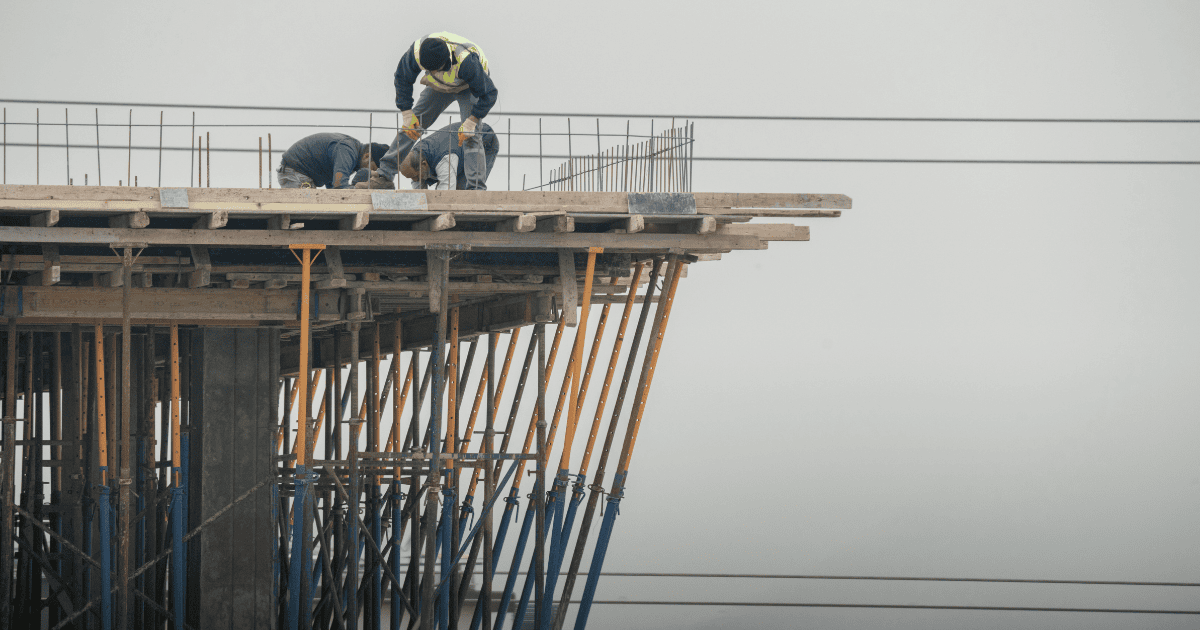
The Greater Toronto Area crossed a milestone in December 2025 that should concern anyone connected to housing, employment or economic policy.
New pre-construction condominium sales fell to the lowest level ever recorded — not simply the weakest month of the current cycle, but the lowest point in the 45 years that data has been tracked.
According to data from Altus Group and the Building Industry and Land Development Association, just 87 new condominium units were sold across the entire GTA in December. Total new home sales of all types reached only 240 units, more than 80 per cent below the 10-year average for the month and lower than any period during the early 1990s recession.
This represents a structural break in the market rather than a short-term fluctuation.
Source: Altus Group/BILD
A downturn that exceeds historical benchmarks
The early 1990s have long served as the reference point for housing market stress in Ontario. Until now, that period still represented the low watermark for sales activity.
That benchmark has now been surpassed.
The comparison is especially stark given the scale of today’s market. The GTA has millions more residents than it did three decades ago, far more households, significantly more capital tied to residential real estate and a substantially larger professional real estate workforce.
When viewed on a per capita basis, December’s sales figures are unprecedented. When viewed relative to the size of the industry that depends on transaction volume, the contraction is severe.
The breakdown of the pre-construction model
Year-end data from Urbanation confirms the depth of the downturn. New condominium apartment sales in the GTHA declined for a fourth consecutive year in 2025, falling 60 per cent from 2024 and more than 90 per cent below the 10-year average. Sales are now approximately 95 per cent lower than the 2021 peak.
As demand deteriorated, developers responded by sharply reducing activity. Only 10 new condo projects launched across the region in 2025, while 28 active projects representing more than 7,200 units were cancelled. Some projects converted to purpose-built rental, but most were removed entirely from the future supply pipeline.

Source: Urbanation
This has direct consequences for construction activity. Condominium starts have fallen nearly 90 per cent over the past three years, bringing the total number of units under construction down to a 10-year low. Urbanation projects that, by the end of the decade, new condominium completions will be virtually nonexistent unless conditions change materially.
Newly completed units returning to market
A related signal emerged in 2025 that has received less attention but reinforces the same conclusion.
At our brokerage, we observed a record number of properties being listed as “brand new” for sale and for lease across the GTA in the resale market. These were newly completed units from the most recent construction cycle, many returning to the market immediately after registration.
The drivers varied. Some purchasers failed to close and units reverted to developers or lenders before being remarketed. Others closed but found that carrying costs at prevailing interest rates exceeded achievable rents, prompting quick resale attempts or a shift into the rental market.
The practical effect was an increase in effectively “new” supply competing directly with pre-construction offerings, often at lower prices and with immediate occupancy. For end users, this provided near-term alternatives. For developers, it weakened the economic case for buying years in advance at a premium.
This trend aligns directly with Urbanation’s finding that approximately 10 per cent of pre-sold condos registered in 2025 failed to close and were taken back by developers, contributing to record levels of completed and unsold inventory.
Economic implications beyond housing
Residential construction is a major contributor to Ontario’s economy. When pre-construction sales stall, the effects extend well beyond developers.
Trades, consultants, brokers, suppliers and lenders all depend on a functioning development pipeline. Construction unemployment tends to rise sharply during periods like this, and it is among the most disruptive forms of job loss due to the concentration of affected workers and the speed at which activity can decline.
Governments also face pressure from both sides of the balance sheet. Development charges, land transfer taxes and property-related revenues weaken at the same time that public spending needs increase. The standard response is expanded infrastructure investment and counter-cyclical spending, which tends to widen deficits as revenues fall.

Source: CoStar
A necessary reset with long-term consequences
While the current downturn is painful, it follows years of structural imbalance. Housing became an outsized driver of economic growth, speculation played an increasing role in demand and government revenues grew more dependent on development and transaction activity.
Those dynamics raised prices, constrained end-user affordability and embedded high costs into new supply. Corrections of this scale are rarely orderly, but they often serve to reset incentives and expose weaknesses that accumulated during expansionary phases.
The challenge is that supply responds slowly. The impact of today’s cancellations and stalled starts will not be fully felt for several years, particularly if population growth resumes while completions fall.
The path forward
Industry participants frequently ask when conditions might improve.
We might see some improvement, which is a pretty easy thing to accomplish from such a low base. “You can only go up from here” is what an optimist might say at rock bottom. Could we return to the dismal sales numbers of 2024 for a 10 to 20 per cent improvement in sales across the board? Yes. Are these impressive numbers in a normal market? Yes.
But are numbers like this going to help us right now? Probably not. This machine is built to run at a long-term average about four times higher than our current level.
Under the most optimistic scenario, a meaningful recovery in pre-construction sales toward that number could begin in approximately three years. Even that outcome would likely require changes to mortgage underwriting rules, reductions in development charges, adjustments to foreign buyer restrictions and sustained wage growth alongside rent stabilization.
A more realistic expectation places recovery five to seven years out, with sentiment and financing conditions improving gradually rather than abruptly. If key policy constraints remain in place, the timeline could extend even further.
A moment for caution
The collapse of pre-construction sales has led some to view the current environment as a form of reckoning for the housing industry. That perspective overlooks the scale of employment and economic activity tied to residential development.
This downturn will be felt not only by developers, but by workers, households and future renters as supply tightens in later years. The decisions made during this period will shape affordability outcomes well into the 2030s.
The present moment calls for careful analysis rather than celebration. Housing cycles do not resolve themselves quickly, and the costs of contraction often emerge long after sales volumes hit their lows.


Daniel Foch is the Chief Real Estate Officer at Valery.ca, and Host of Canada’s #1 real estate podcast. As co-founder of The Habistat, the onboard data science platform for TRREB & Proptx, he helped the real estate industry to become more transparent, using real-time housing market data to inform decision making for key stakeholders. With over 15 years of experience in the real estate industry, Daniel has advised a broad spectrum of real estate market participants, from 3 levels of government to some of Canada’s largest developers.
Daniel is a trusted voice in the Canadian real estate market, regularly contributing to media outlets such as The Wall Street Journal, CBC, Bloomberg, and The Globe and Mail. His expertise and balanced insights have earned him a dedicated audience of over 100,000 real estate investors across multiple social media platforms, where he shares primary research and market analysis.


Ford government poised to waive HST on all new homes as sector struggles

ECB and Bank of England to Stand Pat as Iran Conflict Upends Forecasts

2 dead after 4 rescued from Ottawa high-rise apartment unit on fire: officials – Ottawa

Bob Vylan Banned From U.S. Over Glastonbury Controversy

For five older job seekers, finding new work took creativity, new skills and, in some cases, lowered expectations
