

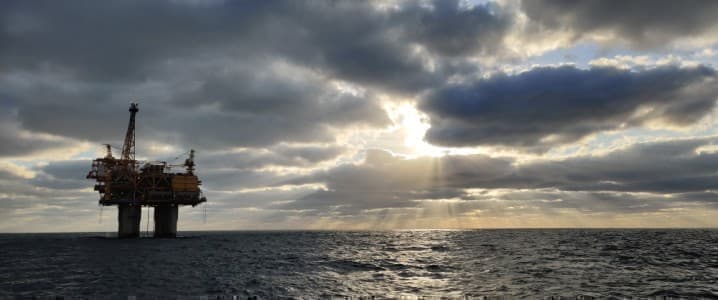
In a mere five years, Guyana went from its first major petroleum discovery to first oil. The former British colony is now pumping around 900,000 barrels per day, making it South America’s third-largest oil producer. Washington’s decision to intervene in Venezuela, snatching President Nicolas Maduro during a daring night raid, removed the only major threat to that world-class oil boom. You see, Maduro was threatening to annex the mineral-rich Essequibo, a region which not only makes up two-thirds of Guyana’s territory but contains the prolific offshore ExxonMobil-controlled Stabroek Block, which is at the heart of the country’s record-breaking oil boom.
The dispute over the Essequibo, which is rich in oil, gold, bauxite, and manganese, simmered for over a century. It stems from a nineteenth-century squabble between the newly independent country of Venezuela and Great Britain over the demarcation of the border of British Guiana. Britain was eventually granted sovereignty over the Essequibo in the 1899 Arbitral Award, which was transferred to Guyana upon the colony’s independence in 1966. The dispute was reignited by Venezuela’s democratically elected president, Rómulo Betancourt, during the early 1960s. Caracas was fearful of British Guiana achieving independence under socialist leadership at a time when there was the risk of a Cuban-inspired leftist armed struggle emerging in Venezuela.
While the dispute bubbled away behind the scenes, very little occurred until Hugo Chavez won Venezuela’s presidency and initiated his nationalist Bolivarian revolution. Ongoing ructions between Caracas and Georgetown, including increasingly hardline rhetoric from Venezuela’s authoritarian socialist regime, saw Guyana ask the International Court of Justice (ICJ) for assistance. This included ruling on the validity of the 1899 award and rejecting Venezuela’s claim to the Essequibo. During December 2020, the ICJ ruled against Carcas’ wishes that the dispute fell within its jurisdiction.
After this determination, Venezuela, led by President Maduro, stepped up its aggressive saber-rattling against Guyana, threatening, if necessary, to seize the Essequibo by force. In response, Georgetown asked the ICJ to ensure measures were established to prevent Caracas from aggravating the claim. In December 2023, the ICJ ruled “Venezuela shall not take any actions that are intended to prepare or allow the exercise of sovereignty or de facto control over any territory that was awarded to British Guiana in the 1899 Arbitral Award.” The tribunal further stated, “Venezuela shall refrain from any action which might aggravate or extend the dispute before the Court or make it more difficult to resolve.”
Maduro was intent on attempting to seize the oil-rich Stabroek Block, after the swathe of major oil discoveries made by Exxon since 2015, while using the land grab as a means of uniting a fractured Venezuela behind his regime. This includes distracting everyday Venezuelans from the economic disaster presided over by the ruling United Socialist Party of Venezuela, as well as the severe political repression and human rights abuses committed by the regime. By late 2023, Caracas was building up its military presence along the border with Guyana, while Venezuelan coastguard vessels were mounting incursions into the former British colony’s territorial waters.
In a controversial December 2023 referendum, Venezuelan voters assented to incorporating the Essequibo into the country. After the poll, Maduro declared the region to be the 24th state of Venezuela, appointing a governor and key administration officials. Caracas also undertook efforts to establish regulations and the basic infrastructure required to exploit the Essequibo’s considerable mineral resources. There were also frequent instances of incursions by Venezuela’s military into the Essequibo. Those events magnified fears of a major border incursion and the possibility of the remote region being annexed by Venezuela.
During March 2020, two Venezuelan Sukhoi Su-30 fighter jets entered Guyana’s airspace. This occurred again in March 2021, when two Venezuelan fighter aircraft, one of which was identified as a Russian-made Sukhoi SU-30, flew over Guyana’s territory. Those events, along with claims that paramilitary and illegal armed groups backed by Caracas were intruding into the Essequibo, sparked considerable consternation in Guyana and neighboring Brazil. This was exacerbated by Venezuela’s military build-up along the border with the Essequibo. This saw Caracas construct military infrastructure while deploying personnel and combat equipment.
In early December 2023, Brazil’s intelligence services warned of the potential for an invasion of Guyana by Venezuela. The situation was so tense that Brazil’s government, in the capital Brasilia, made the decision to deploy troops along the border with Venezuela. Brazil’s President Luiz Inacio Lula da Silva warned Maduro against taking unilateral measures that would escalate the border dispute. As those events occurred, various governments and international bodies, including the United Nations, called on Caracas to avoid the use of force and respect the rulings from the ICJ. Although those appeared to have little effect, Maduro escalated his saber-rattling.
By early March 2025, Venezuelan vessels were mounting incursions into Guyana’s Exclusive Economic Zone (EEZ). This is the area that contains the Exxon-operated offshore 6.6-million-acre Stabroek Block. This deepwater petroleum acreage is responsible for all of Guyana’s oil production and is estimated to contain at least 11 billion barrels of crude oil. There are four operational floating production, storage, and offloading (FPSO) vessels: Liza Destiny, Liza Unity, Prosperity, and One Guyana. Combined, those ships are responsible for lifting around 900,000 barrels per day.
A Venezuelan Coast Guard patrol vessel, the ABF Guaiqueri PO-11 of the Guaiqueri class ocean patrol vessels, entered the Stabroek Block on March 1, 2025. The patrol vessel, over several hours, navigated among the drillships, interrogating crews and claiming that the vessels were operating illegally in Venezuelan waters. This sparked anger and fear in Guyana’s capital, Georgetown, because of the threat it posed to petroleum operations in a boom that has delivered a massive economic windfall for the tiny nation. After this event, U.S. Secretary of State Marco Rubio, who was visiting Guyana in late-March 2025, warned Caracas that there would be consequences if force was used against the former British colony.
Maduro went as far as to accuse Exxon of acting corruptly in concert with noted opposition leader María Corina Machado, winner of the Nobel Peace Prize, to unlawfully exploit the Essequibo’s mineral resources. During March 2025, Venezuela’s Executive Vice President Delcy Rodriguez, who is now the country’s interim president after Maduro’s capture, accused Exxon of conspiring against Venezuela. In a state television broadcast, Rodriguez stated:
“. . . . ExxonMobil has been conspiring against Venezuela for more than a decade to undermine its territorial integrity, to steal the country’s resources, to cause internal political destabilization, to cause grievance, aggression and criminal economic blockade, and to assassinate its authorities,”
While Guyana, including its EEZ, is only 136,191 square miles (352,734 square kilometers), the country’s modest defense force of around 3,700 active-duty personnel is incapable of resisting an attack by Venezuela. The former British colony has no tanks, combat aircraft, or attack helicopters, while only possessing a tiny navy composed of four patrol vessels. This is compared to Venezuela, which, despite many deficiencies, has 120,000 active military personnel, at least 700 main battle tanks (MBTs), around 80 combat aircraft, and a blue water navy with six frigates as well as over 40 patrol vessels.
Those numbers underscore the tremendous threat Venezuela posed to Guyana and its world-class oil boom. Any military operations conducted by Caracas, particularly in the Stabroek Block, had the potential to severely damage vital petroleum infrastructure and hence production. FPSOs, as large stationary commercial vessels operating in a fixed location, are especially vulnerable to strikes by warships and aircraft. Any such event would sharply impact Guyana’s oil production and substantially delay the significant growth forecast for the Stabroek Block and ultimately the country’s oil output.
The Exxon-led consortium, which controls the Stabroek Block, is developing four additional projects. These are the Uaru, Whiptail, Hammerhead, and Longtail facilities, all of which are expected to be completed and commissioned between 2026 and 2030. Indeed, the Uaru project, which is scheduled for start-up later this year, will add 250,000 barrels per day of capacity to production in the Stabroek Block. If all facilities currently under development are completed on schedule, Guyana’s oil production will hit 1.7 million barrels per day by the end of the decade, making it South America’s second-largest oil producer.
Understandably, Georgetown was supportive of the U.S. naval buildup in the southern Caribbean off the coast of Venezuela. Maduro’s aggressive saber-rattling and gunboat diplomacy were a clear danger to Guyana’s world-class oil boom, which had lifted the country out of poverty. This had the potential to derail the development of Guyana’s considerable offshore petroleum potential, and the massive economic boom it is delivering is transforming the one-time poverty-stricken country. Indeed, since 201,9 when oil production began, Guyana’s GDP has surged sevenfold, making it, per GDP per capita, the wealthiest country in South America, 10th globally, and one of the world’s richest countries.
By Matthew Smith for Oilprice.com
More Top Reads From Oilprice.com



