
Real Estate
Three lessons I learned as a TRREB director: Mak

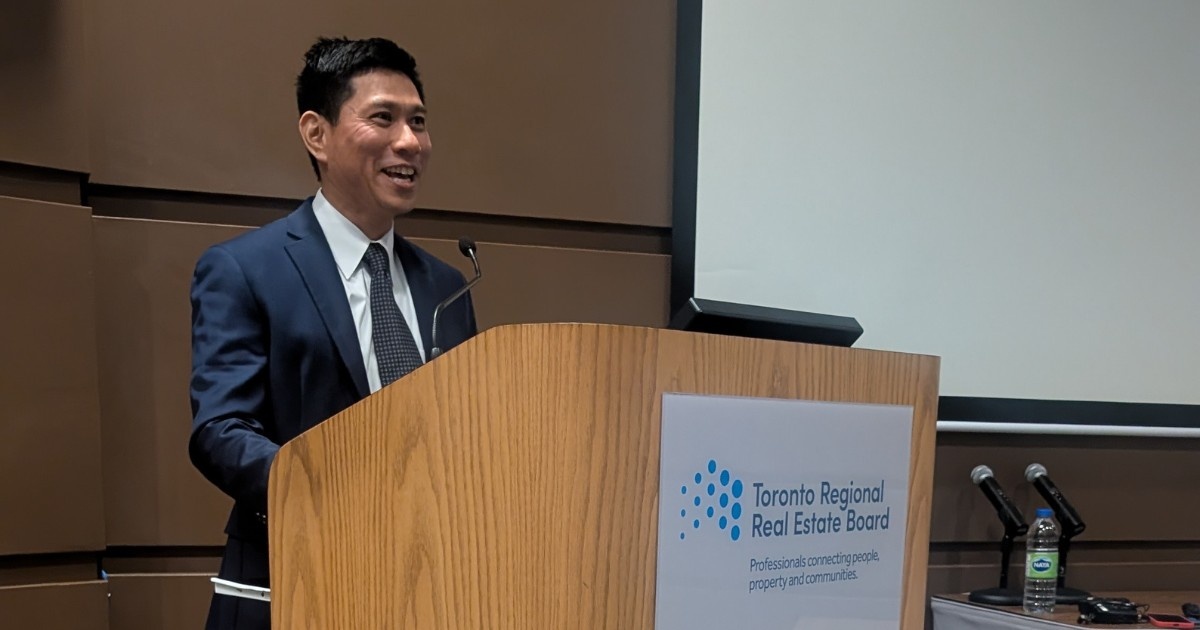
Ever wonder what it’s like being a director for the largest real estate board in Canada?
If you want to run as a director or you’re just curious about the inner workings of The Toronto Regional Real Estate Board (TRREB), let me share the surprises I encountered during my first term.
I walked into my first election thinking my experience was my greatest asset.
Imagine my surprise when I realized that, in the race for director, none of this actually mattered.
Lesson 1 – How do you get elected?
You might be thinking, “Wow! I’ve only ever volunteered at the office potluck. How do I have the credentials to get elected?” Well, my first surprise was that my volunteer experiences were mostly useless.
You see, TRREB is a member-led organization. This means to be elected as a director, you need to get the most votes from your peers.
The first time I ran, I lost. I came a dismal seventh in a field of 10.
The second time I ran, I won because of a perfect storm happening in the industry.
My volunteer experiences had little to do with getting elected. This means, if you want to be a director, you’re going to have to put in the work.
But what do I mean by that?
Many agents are apathetic and don’t really care about who is running. With about 70,000+ members, only about seven per cent actually voted. So, if you want to get elected, you have to “shake hands and kiss babies” with your friends and colleagues. Sometimes the difference is just 20 votes between the next elected director.
I knew of aspiring directors who cold-called agents, solicited at open houses and even aggressively mailed their databases.
Candidly, I did none of the above to get votes, so apparently, I won on my boyish charm alone.
If you want to get elected, I have two suggestions:
Run for a less popular committee
To be able to run as a director, you need TRREB committee experience. The problem is that everyone always applies to the three most popular committees: finance, government relations and the MLS.
So, if you apply to a less popular committee, you’ll have a much better chance of getting selected. Sure, those committees aren’t as sexy as the “Big 3”, but at least you are one step closer to being a qualified candidate.
I’ve sat on both sides of the MLS and technology committee selection process.
Since applicants are selected due to merit and not by popularity, credentials actually matter here.
Trust me, some very impressive candidates apply. So do yourself a favour and choose a less popular committee.
Associate with a big-brand brokerage
To win, you need votes and it’s much easier to go for volume.
Based on previous years, many directors got a lot of votes due to the size of their brokerage or brand.
I count myself lucky in this category. In my elected year, I had the full support of upper management. I could post in the brokerage groups, speak at meetings and they even encouraged our agents to vote for me in official communications.
If you aren’t part of a large brokerage or brand, then the next best way is to reach out to broker owners and managers to see how much support they will give you.
Lesson 2 – What does a director do exactly?
Before I was a director, I assumed it was just “join a few meetings” and that was the end of my responsibilities. How wrong I was!
To understand what a director does, you have to understand how the entire organization fits together. (To be completely honest, I didn’t really understand how organized real estate and TRREB fit together either.)
Many people refer to the TRREB board of directors as a “policy board.” This means the board comes up with policies, and staff implements them.
Here’s a point-form run-down:
- TRREB is a quasi-governmental organization
- It is composed of members who vote for the directors
- The directors are appointed to chair the various committees
- The committees recommend ideas or policies to the BoD
- The BoD votes on the policy or strategy, and the staff implements it
So, let’s take a real-world example.
If you were a director at a non-profit association and wanted to organize a “technology event” to showcase products, a typical scenario would be:
- “Hey, where are we holding this event anyway?”
- “OK, we got 10 pages of sponsors. I’ll take pages one and two and call them by the end of the week.”
- “Isn’t George friends with Mary Smith? Do you think he can ask her to come give one of the keynotes?”
- “This steak is over-cooked; someone go talk with the restaurant manager!”
- “Ah crap, Michael’s car broke down. I guess I’ll go pick up the pizzas for the volunteers.”
For those who have organized events, you know what I’m talking about.
Well, at TRREB, the conversation was a lot different.
Me, “So, uh, I think we should have a technology event…”
Staff, “Sounds good, we’ll make it happen!”
Me, “Awesome! Can we get steak?”
Staff, “No.”
Lesson 3 – Why isn’t anyone happy?
As I mentioned, TRREB is a quasi-government organization. It’s similar to a government organization in that members are super emotional about many topics. The board needs to weigh the pros and cons of each viewpoint and then decide accordingly.
For example, take these two statements:
- TRREB should only provide services for the MLS, education and arbitration.
- TRREB should lobby at the municipal, provincial and federal levels.
Some members might think that TRREB should only focus on the MLS services and local lobbying.
While other members might feel that everything above is essential and well within the mandate of TRREB.
Imagine the spectrum of views from 70,000+ different members. It’s impossible to make everyone happy!
At board meetings, we discuss and debate the different viewpoints and then vote on decisions with the information at hand. We don’t always get it right, but there’s varied enough experience between the directors that try to consider all angles.
And of course, if it’s a truly bad decision, members have the right at the next election to vote the old directors out and vote the new directors in.


Lawrence Mak is an ICON award-winning real estate broker at eXp Realty serving Mississauga and Toronto. To elevate professionalism and foster collaboration within the industry, Lawrence founded two influential groups: Real Estate Rookies and the Commercial Real Estate Agent Network of Toronto (CRETO). Both have more than 2,500 members and contribute to the growth of the real estate community. He has also given back to his brokerage by serving on the national Canadian Agent Advisory Council as well as the provincial Ontario Agent Advisory Council.


$700M in Iran war bets and $1.2M in suspicious profits push Washington toward prediction-market crackdown

Landlord Charles Cohen lands cafe at Decoration & Design Building amid Fortress dispute

Ingram: ‘Time for things to start clicking’

Bob Vylan Banned From U.S. Over Glastonbury Controversy

For five older job seekers, finding new work took creativity, new skills and, in some cases, lowered expectations
