
Real Estate
With plans for Coney Island, Mamdani might do something right

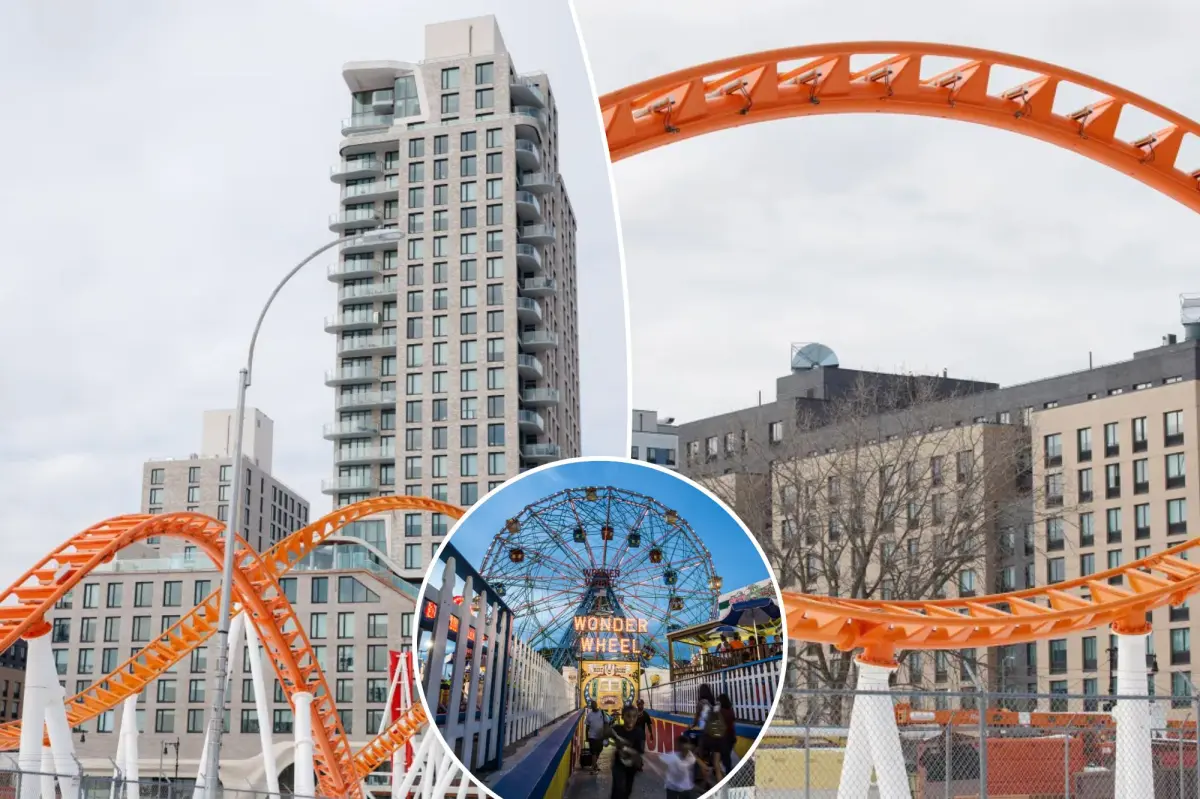
Coney Island has the Cyclone and the Wonder Wheel, an ocean beach and a boardwalk, the famous restaurant Gargiulo’s, lots of new housing — and now, thanks to a rare stroke of economic sanity by Mayor Zohran Mamdani, its own Business Improvement District.
All it needs next is a little luxury. Lest you think I’m howling for “gentrification,” I am, at least up to a point. We don’t want Balenciaga on Mermaid Avenue.
But the neighborhood needs the shopping options and services available in every other middle-class district. Think Target, TJ Maxx, Ulta. The reason they don’t exist there now is that the city has done little or nothing to establish a middle-class community, as it’s beholden instead to woke “affordability” dogma.
It’s why residents must travel miles to find a good retailer other than the CVS pharmacy on Neptune Avenue. Except for the basic-services PureGym on West 8th Street, wellness-seekers are left to jog on the decayed boardwalk that’s studded with holes and splinters.
It would be a welcome stroke of irony if the soon-to-be-formed BID helps to accomplish what our “democratic socialist” mayor most dislikes: real-world economic development that benefits the middle class.
Coney Island, romanticized for its early twentieth-century golden age, has come a long way since its late twentieth-century squalid condition.
Crime has fallen dramatically. Rezoning passed in 2009 spurred a slow but steady residential development boom. More than 3,400 new apartments have been created and thousands more are in the pipeline. The city and state invested $750 million to improve long-neglected sewers, streets and other infrastructure, and to improve conditions in and around the amusement area which draws more than 5 million visitors a year.
Former Mayor Michael Bloomberg spurred creation of a new Luna Park. The historic but derelict ruin of the Parachute Jump was designated a city landmark and spectacularly lit up in 2006 — a beacon of optimism when Coney Island needed all the optimism it could muster.
But the city’s laudable commitment to creating apartments that working-class people can afford has left most of Coney Island without enough market-rate rentals to support better retail and services than currently exist.
In addition to providing supplementary sanitation and beautification services, a well-run BID can persuade businesses to come to an area previously considered off-limits to investment. Let’s hope the new one can raise the area to the next level.
“We’re building a Coney Island where local commerce thrives, corridors are cleaner and safer, and economic opportunity is rooted in the community,” Mamdani said. Let’s see if he means it.
Coney Island is a happy place in summer, but is depressingly lonely the rest of the year.
One priority for the new BID — to be launched in July with a $1 million budget — will be to bring commercial life to Surf and Mermaid Avenues.
There’s almost nothing to buy except food on Surf, and Mermaid is a shopping wasteland. The situation has long frustrated the Coney Island Alliance, a hard-working advocacy group that lacked the resources a BID can bring to the table. (The Alliance, it should be noted, was a prime mover in persuading the city to establish the BID.)
If you haven’t visited in a while, a stroll along Surf Avenue west of the amusement area surprises with a modest new skyline. Crumbling low-rise buildings, vacant stores and empty lots gave way to attractive new apartment towers with fine amenities for tenants. Development firm LCOR drew mostly market-rate rental tenants to 1515 Surf Avenue, home to a new Milk & Honey cafe.
A team of BFC Partners, L + M Partners and Taconic Investment Partners put up two handsome buildings just to the west, one of which attracted a modern supermarket. A third building by BFC alone is under construction; the trio will share a total 1,242 apartments, open to those earning up to 100% of median area income.
They’re all splendid projects. But activists regard still such responsible and reasonable development — even the delightful new veterans-run Cyclone Bagels shop on Surf Avenue — as “gentrification.” They want new housing to be not merely “affordable,” but almost free.
A poster on Reddit cranked: “Coney Island gentrification is already happening!!” Local resident Rosalina Khanis lamented to Brooklyn News Service, “When I was little there were a lot of mom-and-pop shops and overall family-run businesses where everyone knew each other, and now it feels more commercialized, where it’s for business rather than being a community.”
The city has pandered to such arguments for too long. Developer John Catsimatidis has long wanted to build a luxury condo tower next to his Ocean Drive rentals at the boardwalk’s western end, but it requires special approvals — and city bureaucrats have foiled him at every turn.
According to the EDC, of all the new units created in Coney Island’s central rezoned area over the past five years, 75% were “affordable.”
In June of 2025, then Mayor Eric Adams and his team announced a “bold vision” for Coney Island’s future to spur construction of 1,100 new homes — of which, 720 would be “supportive” and/or “affordable.” City Hall and the state nudged the projects along with incentives to developers, including direct cash subsidies and bonds to finance construction.
In December, the city chose the developer RYBAK to build a 500-unit apartment tower on city-owned land on Surf Avenue between West 20th and West 21st streets. Tilyou Towers, named for Steeplechase Park founder George Tilyou, will include 30,000 square feet of ground-floor retail space.
But who will rent the space? Of 505 apartments, 25% will be available to tenants earning as little as 40% of MAI. The situation nearby is even less conducive to middle-class retail.
At Raven Hall, a handsome modern structure at 2006 Surf Avenue that opened a few years ago, most of the 216 apartments are reserved for families earning as little as 40% of median area income (MAI). Some 77 units are earmarked as “supportive for survivors of domestic violence and families experiencing homelessness.”
Coney Landing, another major project, is in the works at 2952 West 28th Street; of 178 apartments, 106 are to be “supportive units.” As per EDC, the majority “will serve individuals and families earning between 30 and 60% of the area median income with supportive units affirming the needs of LGBTQ+ young adults and others experiencing housing instability. “
Luna Green, a 23-story tower on West 21st Street subsidized with federal funds, will have 280 units for senior households earning not more than 50 percent of MAI.
There’s every reason to offer housing to victims of crime and poverty. But is it any wonder that stores and restaurants haven’t rushed in?
Coney Island has more than its share of melancholy, including run-down NYCHA projects and an over-supply of nursing homes at prime waterfront locations. It mustn’t follow in the path of the Rockaways, which the city and state long used as dumping grounds for undesirables of all types — a legacy that haunts the peninsula to this day.
So let the new BID do its work, even if it achieves something that Mamdani never expected from it: a Coney Island welcoming to middle-class residents and worthy of its iconic status.


Iranians cross into northern Iraq for cheaper food, internet and work after border reopens

U.S. moves to stabilize energy markets with the release of 86 million oil barrels

‘Her body was not there’: Mother describes finding daughter's charred remains in Halifax Walmart oven

Bob Vylan Banned From U.S. Over Glastonbury Controversy

For five older job seekers, finding new work took creativity, new skills and, in some cases, lowered expectations
