
Economy
Energy Markets Under Strain: Oil and Gas Prices Surge, Stocks Fall Over Iran War

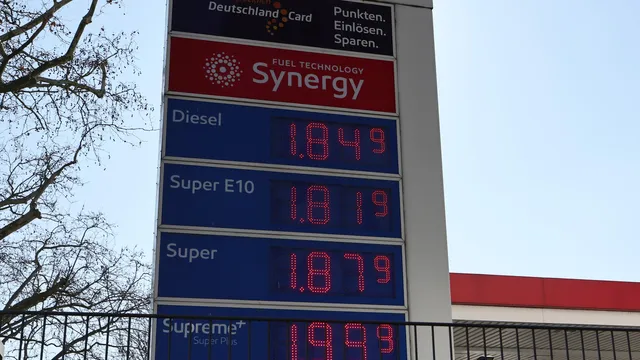
The bombardments have effectively led to the closure of the strategic Strait of Hormuz, through which around 20 percent of global seaborne oil exports pass.
Oil and natural gas prices rose sharply, stock markets declined, and the dollar strengthened on Monday as the escalating war with Iran shook global financial markets.
European natural gas prices jumped by more than 50 percent after Qatar’s state-owned energy company announced it was halting liquefied natural gas production due to Iranian attacks on facilities at two of its main gas processing plants.
Global crude oil futures climbed nearly 9 percent amid concerns over supply disruptions.
Asian and European stock markets fell by more than 2 percent as investors moved funds into the dollar and gold, traditionally seen as safe-haven assets in times of uncertainty.
The US currency gained nearly 1 percent against the British pound before trimming part of its advance, while gold rose 3.1 percent to $5,410.70 per troy ounce.
Shares in energy and defense companies posted significant gains, with BAE Systems rising 6 percent in London.
“Investors are flocking to safe havens, seeking protection as the conflict in the Middle East widens,” said Susannah Streeter, head of investment and markets at Wealth Club.
After US and Israeli strikes on Iran over the weekend, Israel bombed Lebanon on Monday following rocket fire from Hezbollah.
Several US military aircraft crashed in Kuwait due to friendly fire, and Iran carried out missile strikes across the region.
The bombardments have effectively shut down the strategic Strait of Hormuz, through which about 20 percent of the world’s seaborne oil exports transit. Several vessels were attacked.
Airline stocks dropped sharply amid mass flight cancellations. Qantas and Singapore Airlines lost around 5 percent, British Airways (IAG) fell 5.8 percent, and Air France-KLM declined 8.3 percent.
Energy companies, however, recorded gains. Australia’s Woodside Energy rose by more than 6 percent, PetroChina added nearly 4 percent, Shell advanced almost 3 percent, and TotalEnergies gained over 4 percent.
“If higher oil prices persist, this increases the risk of more entrenched inflation,” warned Charu Chanana of Saxo Markets.
The developments could pose a challenge for US President Donald Trump, who pledged low prices ahead of the midterm elections in November.
Rising energy costs, more expensive transport, and losses in the aviation sector could have a “detrimental effect on growth,” said economist Eric Dor of IESEG School of Management in Paris.
“If it lasts three days, it’s not serious. But if it continues longer, it will have an additional recessionary effect,” he told AFP.
Oil-importing countries hold strategic reserves, with OECD members required to maintain stocks covering 90 days. Analysts, however, do not rule out prices exceeding $100 per barrel.
If the disruption in the Strait of Hormuz continues, “whatever spare capacity exists will not make up for this shortfall. The gap is simply too large,” said Amena Bakr of Kpler.
Key members of the OPEC+ cartel on Sunday announced a larger-than-expected increase in production quotas. | BGNES


BXP signs tenants at 360 Park Ave. South

Andrade makes a huge announcement on his future; but not in AEW!

Brazil ex-President Bolsonaro's kidney function improves but he remains in intensive care

Bob Vylan Banned From U.S. Over Glastonbury Controversy

For five older job seekers, finding new work took creativity, new skills and, in some cases, lowered expectations
