
Real Estate
RECO announces mandatory financial filings for brokerages in oversight overhaul

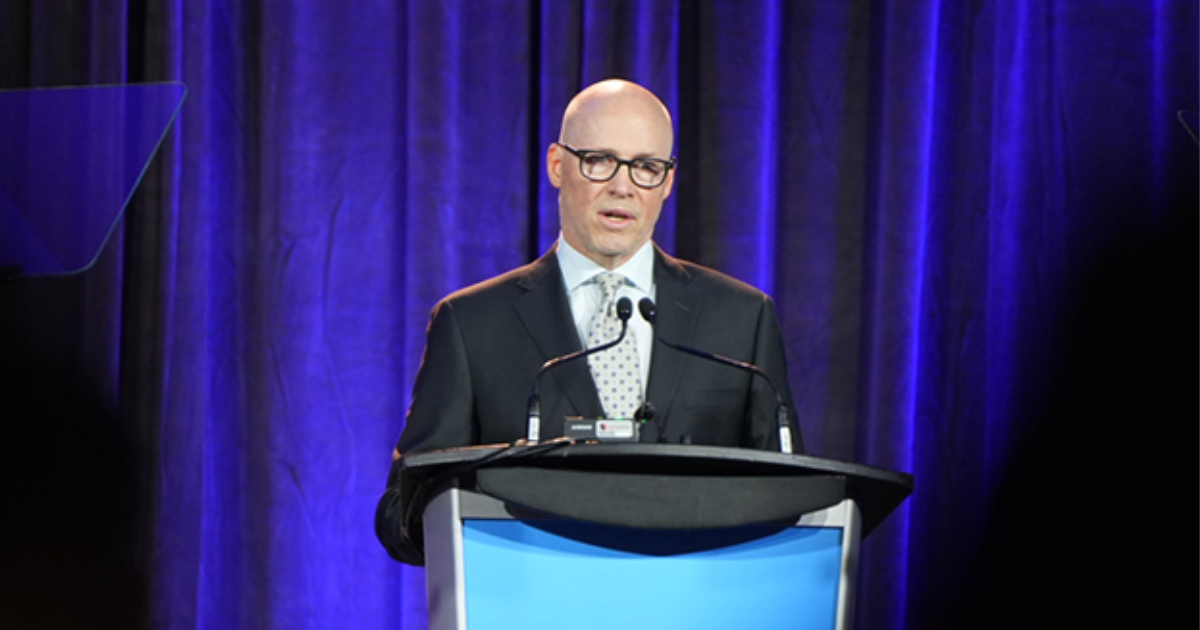
Jean Lépine (OREA)
QUICK HITS
- Ontario’s real estate regulator is requiring brokerages to file annual financial statements as part of a sweeping modernization effort aimed at strengthening consumer protection and preventing future trust account abuses.
- RECO administrator and acting CEO Jean Lépine outlined the changes at OREA’s annual general meeting, framing them as part of eight transformation initiatives informed by the Dentons Report’s findings following the $10-million iPro Realty trust account scandal.
- The regulator is also launching a public awareness campaign this fall, reviewing its education program in 2026, and has commissioned an independent review of its fees.
Ontario’s real estate regulator is pushing forward with sweeping reforms aimed at preventing future trust account abuses, announcing mandatory annual financial filings for brokerages as it moves to address weaknesses exposed by a string of high-profile enforcement cases.
Jean Lépine, administrator and acting chief executive of the Real Estate Council of Ontario (RECO), outlined the changes at the Ontario Real Estate Association’s annual general meeting on Thursday, framing them as part of a broader transformation of an organization still recovering from the fallout of the iPro Realty Ltd. trust account scandal.
“Our goal is simple — to make RECO the most modern, technologically advanced real estate services regulator in the country,” Lépine told the gathering.
The announcement comes as RECO continues to deal with the consequences of the $10-million iPro matter, which triggered a scathing audit by Dentons Canada LLP and prompted the Ontario government to appoint Lépine as administrator in December 2025. More than 500 consumer claims have since been processed and closed, with 1,540 of 2,559 commission claims fully paid to date.
The need for stronger oversight has been underscored by two additional enforcement actions in recent months. In February, RECO issued notices of proposal to revoke registration, immediate suspension orders and freeze orders against four Save Max brokerages after a forensic review found $2.7 million had been improperly withdrawn from trust accounts at the Mississauga-based operations. About 400 agents were affected. Save Max is appealing the regulatory action.
In December, the regulator froze accounts at Scarborough-based HomeLife Today Realty Ltd. after discovering a $580,000 trust account shortfall.
Financial filings and oversight reforms
The annual financial filing requirement is expected to be implemented later this year and is designed to enable earlier identification of risk. RECO says it will share requirements with brokerages this spring.
“This work is not about burdening good operators or creating unnecessary red tape,” Lépine said. “It is about ensuring that a small number of bad actors do not undermine the integrity of the entire profession.”
The association welcomed the announcement, “OREA is thrilled to see RECO and the Government of Ontario heed our calls for increased financial oversight and trust account reforms for brokerages, which will go a long way towards building back trust in the regulator,” said Kim Fairley, the association’s 2026 president, in a statement.
Lépine said the new filings will feed into a risk-based compliance framework, allowing most registrants to serve their clients without disruption while focusing regulatory attention where risks are greatest. He said any compliance tools would be applied proportionately, with a focus on early intervention rather than punishment.
Fee review underway
Lépine, who is about three months into the role, also addressed RECO’s financial sustainability directly, acknowledging the pressures facing registrants after years of market volatility and regulatory uncertainty.
An independent third-party review of the cost of delivering on RECO’s mandate is now underway. Lépine said if fee changes are required, they will be communicated with advance notice and an understanding of the realities facing the profession.
“A strong regulator supports a strong profession,” he said. “When consumers trust the system, they trust the professionals within it.”
Education modernization on the horizon
RECO also plans to review its education program in 2026, with a summit scheduled for April 9. The goal, Lépine said, is to move education from a passive requirement to an active regulatory tool, with a clear strategy in place by year-end.
A public awareness campaign, set to launch this fall, will explain RECO’s role as the regulator.


Jordana is the editor of Real Estate Magazine. You can reach her by email.


There's a new wedge issue playing out in Senate Dem primaries

Anti-war protests in Italy and Spain as high-stakes referendum on Italian judges looms

Interviews with voters in a Cincinnati suburb reveal anxiety over the potential for another elongated U.S. war

Bob Vylan Banned From U.S. Over Glastonbury Controversy

For five older job seekers, finding new work took creativity, new skills and, in some cases, lowered expectations
