

The online debate continues to rage over the merits and demerits of the U.S.’s audacious capture of Nicolás Maduro. Narratives around international law and geopolitical ramifications are relevant, but Venezuela’s oil potential now dominates.
I have written that the ‘war for oil’ narrative is a mirage. Just as there are many competing interests in the Trump administration, there are myriad motives for Maduro’s removal – be they fair or foul.
While Venezuela’s proven reserves are formidable, the expert consensus holds that sizeable investments will be required to ramp up production. The skilled navigation of legal constraints interwoven with U.S. political interests will likewise be necessary to put expansion on a sound footing.
This cannot be emphasised enough. The Trump administration’s policy to-date has been to constrain the Venezuelan oil industry. If the industry is to flourish, private sector participants will need to unpick, or need support unpicking, the existing web of trade and financial restrictions.
Needless to say, Venezuela’s politics – and their relative stability – will be essential. Contrary to the expectations of most of the American press, the de facto leader of Venezuela’s opposition, María Corina Machado, has been sidelined by President Trump.
While Machado thinks her wing of politics should “absolutely” lead Venezuela, the President is categorically against it. “I think it would be very tough for her to be the leader”, said Trump just days ago. “She doesn’t have the support within or the respect within the country. She’s a very nice woman, but she doesn’t have the respect.”
Instead, the White House has turned to Delcy Rodríguez, now the interim President of Venezuela, formerly Maduro’s deputy. Rodríguez is known in diplomatic and commercial circles as a pragmatist. Trump and his Secretary of State Marco Rubio are placing their trust in her to maintain political stability and improve PDVSA’s performance in conjunction with U.S. oil majors.
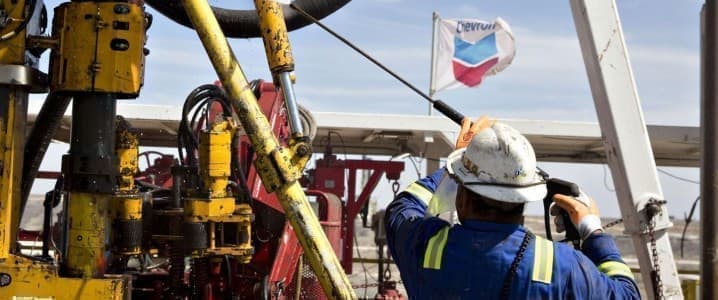
The Chevron model may serve as the blueprint for this renaissance. In the context of longstanding oil sanctions, which have fluctuated in their severity under the Biden and second Trump presidencies, Chevron has continued to operate in Venezuela via a joint venture agreement (or “mixta”) with PDVSA — a prerequisite for operating in Venezuela’s energy sector — which is overlaid with additional contracts.
This approach was signed off by the U.S. Office of Foreign Assets Control (OFAC) in late 2022, allowing Chevron to resume production ahead of its competitors. The Chevron model presents a mutually beneficial path forward: U.S. majors need operational certainty, while Interim President Rodríguez needs to show Trump good faith and reboot the economy.
The Venezuelan people stand to benefit from political continuity and industrial improvements. They want dollars to flow into the economy, creating opportunity, fighting inflation and staving off devaluation.
With new deals under proven models, this is in reach.
Machado is presented as the face of Venezuela’s democratic wave, but U.S. investors and the Trump administration are wary of her as a destabilising force. Rodríguez is ideally positioned to balance national sovereignty with U.S. demands.
President Trump’s messaging towards the Venezuelan government will no doubt swerve between accommodation and criticism in the coming days and months.
But the facts of the situation will remain unchanged. The U.S. did not remove Maduro in support of Machado’s movement, or out of outright hostility to Chavismo. What Trump seeks is regional dominance and, in his eyes, the related pursuit of U.S. energy and migration interests.
As such, there will be more continuity in Venezuela than many commentators might think.
By Cyril Widdershoven for Oilprice.com
More Top Reads From Oilprice.com



