

Canada’s long-running debate over how to get its oil to market took an unexpected turn this week after British Columbia Premier David Eby argued that Ottawa should prioritize building refineries rather than new export pipelines, reframing a discussion that has dominated Canadian energy politics for years.
Eby’s comments come as U.S. actions in Venezuela add uncertainty to global oil markets and renew attention on Canada’s reliance on the United States as its main crude buyer. Instead of pushing raw oil to tidewater for export, Eby has suggested Canada should invest in domestic refining capacity to capture more value at home and reduce dependence on foreign processors.
Canada isn’t self-sufficient for refined fuels. The country ships most of its oil out as raw crude. And much of the fuel used in Eastern Canada and British Columbia is imported. Eby said building refineries would keep more of that work and money in Canada and make the system less exposed to disruptions.
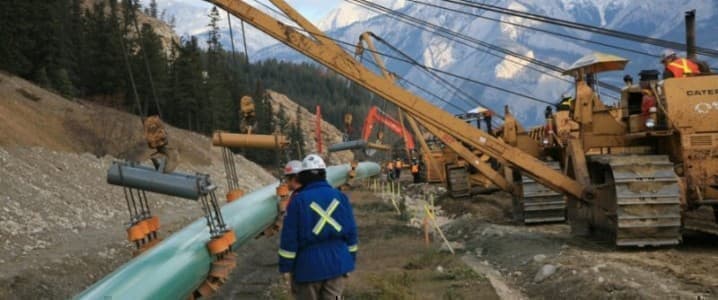
The proposal lands as Ottawa and Alberta continue to explore the possibility of a privately financed pipeline to the Pacific Coast, a plan unveiled late last year as part of a broader effort to reduce Canada’s trade dependence on the United States. The framework represents a break from Canada’s recent energy policy, but it remains unresolved. No private company has agreed to build the pipeline, and opposition from Indigenous groups and coastal communities has not softened, particularly where tanker traffic would be involved.
Related: UK North Sea Oil Enters Survival Mode as Investment Dries Up
At the same time, refining has become more profitable globally. Margins in North America, Europe, and Asia have risen as refinery closures, outages, and sanctions have tightened fuel markets. Crude supply is expected to remain ample into 2026, but gasoline and diesel availability are tighter, increasing the value of refining capacity.
Canada’s refining system, however, is aging and largely configured to serve domestic demand. Not export markets.
New refineries would require heavy upfront investments, mountains and years of permitting, and political coordination unfamiliar to Canada’s energy projects. Critics say the country could spend tens of billions only to find demand softer than expected or face tougher competition from newer, lower-cost refineries in the Middle East and Asia.
The Venezuela element further complicates the picture. The Trump administration has signaled plans to revive Venezuelan oil production and direct large volumes to U.S. refiners. Many of these are already designed to process heavy crude similar to Canada’s oil sands blends. A resurgence of Venezuelan barrels into the U.S. Gulf Coast would benefit American refiners while increasing competition for Canadian crude, potentially pressuring prices and export volumes.
Federal officials have downplayed the threat, insisting Canadian oil will remain competitive even if Venezuelan output rebounds. Ottawa continues to back carbon capture projects and regulatory carve-outs designed to keep oil sands production viable, while insisting climate targets remain intact.
That leaves Canada with a bigger question than pipelines versus refineries. It’s whether the country can move further up the value chain at all — and do it in a way that survives politics, market cycles, and trade shocks. Refining markets are tight. U.S. trade policy is unreliable. Venezuelan barrels may be coming back. What Canada chooses next will shape where its oil fits in the global system, and for how long.
By Julianne Geiger for Oilprice.com
More Top Reads From Oilprice.com



