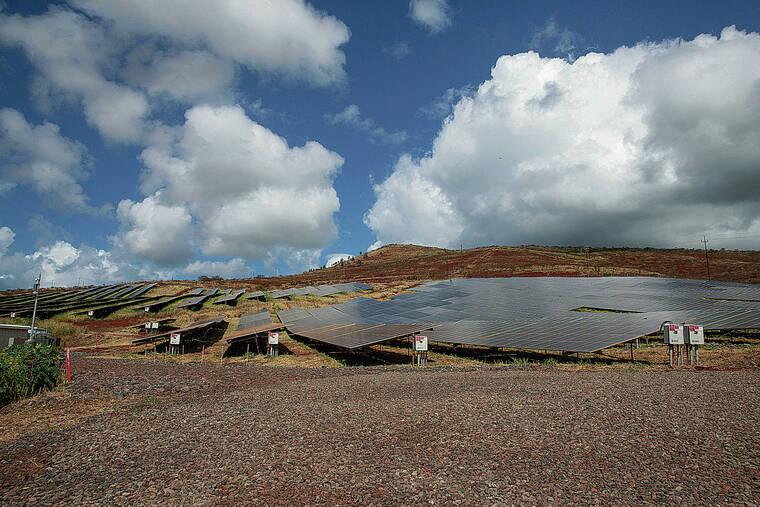
Throughout my legislative and regulatory careers, I voiced concerns about Hawaii’s heavy dependence on imported oil and the need to diversify our energy mix balancing the goals of: 1) the need to increase our use of renewable resources; 2) ensuring grid stability and reliability; and 3) keeping energy costs stable, equitable and affordable for Hawaii’s families and businesses.
A critical component to balancing those goals was a timely transition to natural gas. Working alongside renewable resources, natural gas could have provided a bridge to a more stable and affordable energy future. The intent was never to slow Hawaii’s progress, it was to give Hawaii a realistic timetable to transition cost effectively and responsibly while maintaining reliability and affordability. By not moving forward, our state missed out on an estimated $1.5-$3.5 billion in fuel cost savings over the past 10 years.
Hawaii has long been a leader in renewable energy, and that leadership is something we can be proud of. We have seen more rooftop solar, more wind and growing investment in storage and efficiency.
Yet, as isolated island grids, we still rely heavily on imported fuel and have limited options for backup power when disruptions occur. These realities remind us that our transition must be guided by both vision and practicality.
A 2020 state Public Utilities Commission audit of Hawaiian Electric highlighted the need to modernize our infrastructure and strengthen reliability. The report did not point fingers, but it did make clear that we must move faster to replace aging, highly inefficient, unflexible oil-fired generators. A modern, resilient grid is the backbone of a clean energy future. Without it, even the cleanest renewable resources and policies cannot deliver on their promise.
Having spent many years developing energy policy and regulating the key drivers of this transformation, I know that progress depends on both inspiration, careful planning and investments. Hawaii has always been rich in vision, but we must continue to match that vision with practical action. This means investing in new technologies, modernizing our grid, and supporting policies that strengthen resilience and affordability at every level of our energy system
That is why I was encouraged by Gov. Josh Green’s mission to Japan last fall. His meetings with energy and technology leaders, including JERA Co., Inc., NEC Corporation and the Yomiuri Shimbun Group, signal that Hawaii is seeking solutions through global collaboration.
The new agreement between the state of Hawaii and JERA is a meaningful step forward. It supports the recommendations in the “Alternative Fuels, Repowering and Energy Transition” study published last year by the Hawaii State Energy Office, which calls for greater diversification and innovation in how we produce power.
JERA, Japan’s largest power producer, has committed to achieving zero carbon emissions by 2050. Its experience in clean and low-carbon energy development aligns with Hawaii’s goals and can help us strengthen energy security while moving toward a carbon-free future. Hawaii’s clean energy transition does not have to be a choice between renewables and other cleaner alternatives. When we create these strategic partnerships, we build the momentum needed toward full decarbonization.
Hawaii’s energy transformation will not happen overnight and will go way beyond election cycles. It will take time, persistence, collaboration, considerable investment and flexibility while we keep our eye on Hawaii’s end goals. We will succeed when we combine local expertise, innovation and partnerships focused on real solutions that protect both our environment and our economy.
Vision and pragmatism are not opposing forces. When we embrace both, we move closer to an energy future that is sustainable, secure, and truly reflective of who we are as an island community — innovative, resilient and guided by our shared purpose of aloha aina.
Mina Morita is a former state legislator and former chair of the Hawaii Public Utilities Commission.