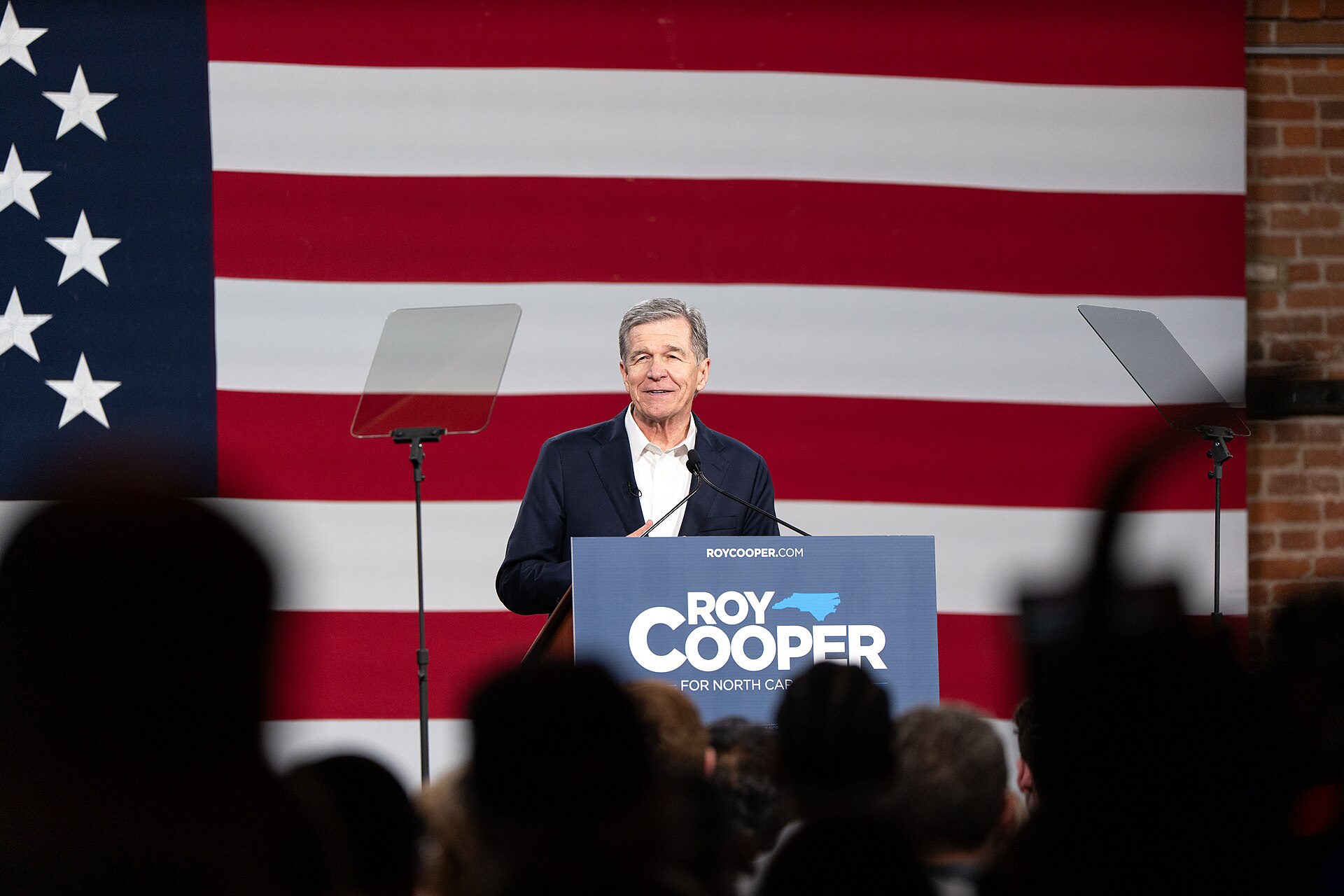
November 3 election-night update: AP projects a Democratic Senate flip in North Carolina and Ossoff's hold in Georgia; the broader congressional contest is still unfolding.
Democrats notch a pickup in North Carolina and hold Georgia
On Tuesday, November 3, 2026, the Associated Press projected former Democratic Governor Roy Cooper the winner of North Carolina's U.S. Senate race over Republican Michael Whatley. AP called the result at 8:23 p.m. Eastern. That is a genuine Democratic pickup because outgoing Republican Senator Thom Tillis held the seat. AP separately called Democratic Senator Jon Ossoff's re-election in Georgia against Republican Mike Collins at 7:55 p.m. Eastern. Georgia was a Democratic hold, not a flipped seat. News-service race calls are projections ahead of formal state certification. Control of the House and Senate remained unsettled in this Tuesday-evening report.
What remains to be decided in Congress
All 435 seats in the U.S. House and 35 seats in the Senate were contested. Republicans began the night controlling both chambers. Democrats needed a net pickup of three House seats and four Senate seats for majorities, Reuters reported. The North Carolina result reduces the remaining net Senate pickups needed if Democrats also defend their other seats, but it does not by itself decide the chamber. Close contests in Alaska, Iowa, Kansas, Maine, Ohio and Texas, alongside key Democratic defences, may matter. Projections for individual seats are not the same as declaring which party controls Congress.
What U.S. voters told exit pollsters
Early election-night exit polling cited by Reuters pointed to widespread unease about the country's direction: roughly three-quarters of respondents said they were angry or dissatisfied, and 70% said Congress should provide stronger checks on the president. Those figures describe respondents in exit polls, which are estimates subject to sampling and later revision; they are not official vote tallies. Concerns about the cost of living, fuel prices, international conflict and immigration were prominent. Republican and Democratic campaigns offered sharply different accounts of the policies responsible and what Congress should do next.
A Canadian stake in the results
Control of Congress matters to Canada because lawmakers can influence federal spending, trade legislation and oversight of U.S. policy. Ottawa is already navigating tariff uncertainty and broader trade discussions with Washington. Canada's Parliamentary Budget Officer estimates trade measures introduced since early 2025 could leave the level of Canadian real GDP 1.4% below a pre-tariff baseline after five years. A congressional election does not automatically remove those measures or dictate the Canada–U.S. trade talks, but a new majority could affect political pressure and the opportunities for legislation.
How CDN News will label results
This report is an evening-of-November-3 snapshot for Canadian readers, not a real-time election ticker. News-service projections, partial leads and certified state results are different stages. Race-specific counts may change as further ballots are processed, and some contests could take days to resolve. For current counts consult Associated Press results and individual state election offices; no uncalled race is presented as a winner. Related CDN News explainers separately examine Senate battlegrounds, the House seat map and Canada's trade exposure, avoiding duplication of this overall election-night lead.
Sources & transparency
Reuters, November 3, 2026: U.S. midterms, Georgia result and congressional controlAssociated Press, live 2026 U.S. midterm election resultsAssociated Press, U.S. House election resultsParliamentary Budget Officer, October 20 assessment of trade measuresAssociated Press, November 3: Roy Cooper wins North Carolina, called 8:23 p.m. ESTOriginal CDN News coverage. Sources are linked for reference.
Request a correction